
Research


Publications
Ethnic Diversity and Cooperation After Disaster: Evidence from Hurricane Harvey (with Pablo Pinto and Agustín Vallejo). Conditionally accepted, Journal of Political Institutions and Political Economy. AbstractUnder what conditions does disaster exposure shape cooperation? A large literature examines the link between disasters and cooperation. We study how a key feature of the social environment—ethnic diversity—moderates the relationship between disaster damage and cooperation. We argue that diversity shapes different forms of cooperation depending on the feasibility of monitoring. When monitoring is feasible, as in face-to-face interactions, we do not predict a systematic relationship between diversity and cooperation following shocks. By contrast, when monitoring is more difficult, as in the provision of public goods such as climate adaptation policies, we predict a diversity penalty: following shocks, cooperation is lower at higher levels of diversity. We examine these predictions using observational and experimental data from Hurricane Harvey, which generated substantial variation in local exposure to disaster damage. Consistent with prior work, diversity is associated with weaker pre-disaster cooperation with neighbors. Following the storm, we find no diversity penalty in interpersonal face-to-face helping behavior, but document a diversity penalty in support for climate adaptation policies. A partner-choice experiment shows that civic-association membership becomes a stronger channel for cooperation in more diverse settings, consistent with associations serving as a monitoring technology.
[Stigler Center Working Paper]
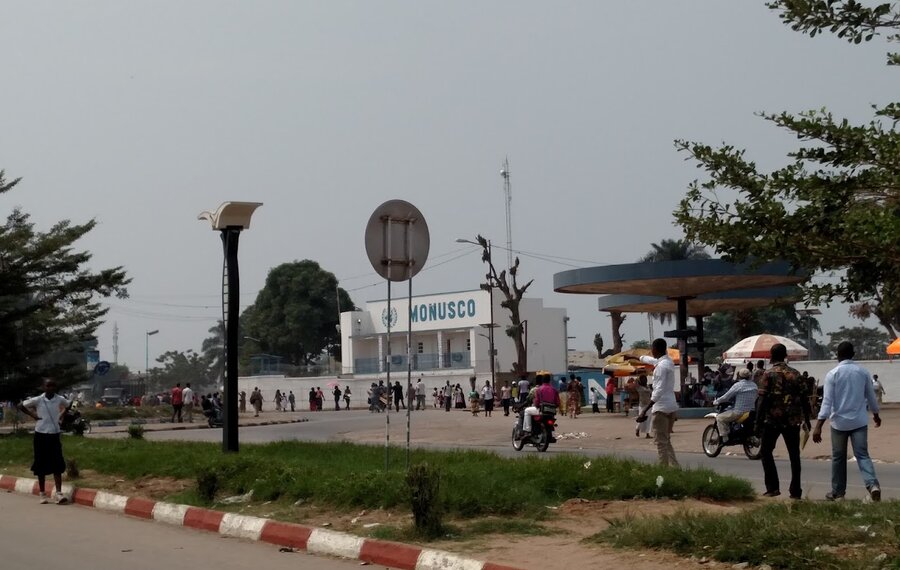
Property Rights and Social Institutions in Urban Africa: Experimental Evidence from a Land Formalization Program in the DRC (with Augustin Bergeron, Gabriel Tourek, and Jonathan Weigel). Comparative Political Studies, 2026. AbstractFormal property rights to land remain rare in sub-Saharan Africa. We argue that social institutions shape citizens’ demand for land formalization. When offered the opportunity to formalize, citizens weigh the insurance and tenure-security benefits of informal institutions against their monetary and social obligations. We study a randomized land titling program in a large Congolese city that sharply reduced the costs of acquiring a title. The program caused large increases in both initiation and receipt of titles. Demand was strongest among citizens more engaged in social institutions and more connected to city chiefs, yet such ties did not predict completion of the titling process. Program assignment also reduced citizens’ participation in social institutions and worsened their evaluations of chiefs. These findings suggest that, in urban settings where land values are higher and social institutions are more costly, citizens may exit social institutions when formal alternatives become available, illustrating how formalization can reshape engagement with informal authority.
[Journal] [Stigler Center Working Paper]
Media coverage: [ProMarket] [IGC Policy Brief] [EGAP] [J-PAL]
Family Ties as Corporate Power (with Juan Dodyk and Ignacio Puente). Journal of Politics, 2026. AbstractPolicies interact with underlying social organizations, which can deflect their intended goals. One example is legislation aimed at curbing business influence. Can campaign finance regulation reduce the political power of economic actors? We identify a factor that may hinder its effectiveness: the social structure of organizations. We argue that such regulation generates cooperation dilemmas within firms’ leadership and propose that a specific organizational feature—family ties—can help resolve them. We evaluate this argument by studying a ban on corporate contributions in Brazil, using granular data on family ties in publicly traded firms. We show that, following the ban, members of firms’ controlling families substituted individual for corporate contributions. Moreover, we document peer effects in the contributions of family members, suggesting that family ties are a channel of political influence. These bifurcated effects illustrate how organizational structure can be a source of de facto power and offer a cautionary note to policymakers.
[Journal] [Stigler Center Working Paper] [Online Appendix]
Media coverage: [ProMarket]
The Political Behavior of Family Firms: Evidence from Brazil (with Juan Dodyk and Ignacio Puente). World Development, 151, March 2022. AbstractWe study the political behavior of family firms, the most prevalent corporate structure across the developing world. We argue that family firms are more politically active because their longer time horizons enable them to build and sustain relationships with political actors and to extract benefits from their political investments. Combining previously untapped firm-level information on family ties in publicly listed Brazilian firms with data on corporate campaign contributions, we document that family firms are 15 percentage points more likely to contribute to political campaigns compared to non-family firms — an 82 percent increase. We also find that individuals with family ties in a firm’s leadership positions are more likely to make contributions. Contributions by family firms are more persistent over time, indicating that they reflect relationships. Family firms that contribute to campaigns are rewarded with state-subsidized loans, while those that fail to contribute face a penalty, suggesting a dynamic of reciprocity between business and state actors. Finally, we show that the entry of institutional investors has the potential to crowd out family ties within firms. The results provide empirical support to the claims of studies of comparative capitalism, while showing that the equilibria they describe are not necessarily static.
[Journal] [Online Appendix]
Media coverage: [ProMarket]
Local Elites as State Capacity: How City Chiefs Use Local Information to Increase Tax Compliance in the D.R. Congo (with Augustin Bergeron, Gabriel Tourek, and Jonathan Weigel). American Economic Review, 112(3): 762–797, March 2022. AbstractThis paper investigates the trade-offs between local elites and state agents as tax collectors in low-capacity states. We study a randomized policy experiment assigning neighborhoods of a large Congolese city to property tax collection by city chiefs or state agents. Chief collection raised tax compliance by 3.2 percentage points, increasing revenue by 44 percent. Chiefs collected more bribes but did not undermine tax morale or trust in government. Results from a hybrid treatment arm in which state agents consulted with chiefs before collection suggest that chief collectors achieved higher compliance by using local information to more efficiently target households with high payment propensities, rather than by being more effective at persuading households to pay conditional on having visited them.
[Journal]
Media coverage: [VoxDev] [J-PAL]
Information Provision, Voter Coordination, and Electoral Accountability: Evidence from Mexican Social Networks (with Eric Arias, Horacio Larreguy, John Marshall, and Pablo Querubín). American Political Science Review, 113(2): 475–498, May 2019. AbstractHow do social networks moderate the way political information influences electoral accountability? We propose a simple model in which incumbent malfeasance revelations can facilitate coordination around less malfeasant challenger parties in highly connected voter networks, even when voters update favorably about incumbent party malfeasance. We provide evidence from Mexico of this mechanism by leveraging a field experiment in a context where the provision of incumbent malfeasance information increased support for incumbent parties, despite voters continuing to believe that challengers were less malfeasant than incumbents. Combining this experiment with detailed family network data, we show that—consistent with the model—the increase in incumbent party vote share due to information provision was counteracted by coordination around less malfeasant challengers in precincts with greater network connectedness. Individual-level data further demonstrate that networks facilitated explicit and tacit coordination among voters. These findings suggest that networks can help voters coordinate around information to help remove poorly performing politicians.
[Journal]
Fun fact: The paper is featured as an example in Steven Pinker’s article Piled Modifiers, Buried Verbs, and Other Turgid Prose in the American Political Science Review. PS: Political Science & Politics 55(1).
Working Papers
Barriers to Formalization: Evidence from Six Randomized Experiments on Transaction Costs, Public Services, and Taxation in the Global South (with Ana de la O, Donald Green, and 23 other coauthors). Under review, Nature. AbstractWe present six harmonized RCTs to assess whether removing bureaucratic hurdles can encourage individuals to engage formally with the state in six countries in the Global South. Recent work has argued that the trade-offs inherent to formalization are more acceptable to individuals when formalization is tied to publicly-derived benefits, such as access to legal recourse in disputes, public services, or public utilities. Yet, even in these cases, bureaucratic barriers to formalization might be insurmountable. So far, disconnected research on different bureaucratic procedures has led to contrasting conclusions about how entry costs affect formalization. Our interventions involved in-person assistance to reduce the upfront transaction costs of dealing with the bureaucracy in three types of policy domain: titling property, registration of small businesses, and access to public utilities (i.e., municipal water) and public services (i.e., garbage collection). A meta-analysis shows that the average effect of these interventions on individuals’ formalization, tax payment, and access to services is indistinguishable from zero. We also find substantial heterogeneity in individuals’ intent to undertake and complete the bureaucratic process. Across policy domains, individuals are more willing to bear formalization’s downstream costs when the benefits are individual. Our results also suggest that local bureaucratic incentives must be aligned for demand-side interventions to work.
The Long-Term Careers of Political Brokers: Evidence from Mexico (with Tesalia Rizzo). Under review. AbstractPolitical brokers are central actors in developing-world democracies, yet little is known about their long-run careers. We fielded an original life-history survey of precinct chiefs of a major Mexican party, combining party rosters with a matched sample of party sympathizers and a representative state-level survey. We also matched both rosters to official candidate registries covering nine elections between 1991 and 2024, allowing us to observe political advancement independently of survey response. Brokerage is highly durable: average tenure exceeds two decades. Brokers report greater early political ambition and family activism than sympathizers but do not come from more advantaged socioeconomic backgrounds. They are poorer than both sympathizers and the broader population and show little evidence of greater economic mobility across income, housing, job status, and wealth. Politically, brokers remain strongly partisan and are substantially more likely than sympathizers to enter electoral competition, yet only a small minority ever take office. The results portray brokerage as a durable political career that opens access to candidacy but rarely to office and is not accompanied by greater economic mobility. The study extends research on political careers and class representation beyond formal officeholders and provides a strategy for studying hard-to-reach political populations.
The Conservation Paradox: How Armed Groups and the State Shape Forest Governance and Conservation in Post-Conflict Colombia (with Heather Huntington and Juan F. Tellez). Under review. AbstractNearly half of rebel groups worldwide engage in some form of environmental governance. Drawing on an original household survey, satellite measures of forest loss, and qualitative interviews from the Colombian Amazon, we document a paradox: armed-group governance is associated with more rules concerning forest use, but not with reduced forest loss. We argue and show that the effects of environmental rules depend on the economic activities they regulate and on the configuration of actors that creates and enforces them. Forest loss is especially high where armed groups govern alongside local civilian institutions and illegal economies are prevalent, consistent with armed groups co-opting these institutions to promote extraction. By contrast, regional environmental authorities are associated with lower forest loss, especially where extractive pressures are greater. Environmental governance thus cannot be understood independently of the political economy of extraction.
Political Cues at Work: Family Control and Workplace Alignment. Under review. Draft available upon request. AbstractProminent accounts of workplace mobilization emphasize employers’ leverage over economically dependent workers. I develop an informational account in which the political choices of those who control a firm provide cues about whom to support. I examine this argument in the context of Brazil’s 2015 ban on corporate campaign contributions, which I argue increased the salience of controlling-family donations. Combining data on publicly listed Brazilian firms, family ties, formal-sector workers, and campaign contributions, I find greater alignment between workers’ donations and the controlling family’s party support in the first post-ban election, but no detectable differential increase in donation participation relative to privately controlled non-family firms. Identified relatives also donate at much higher rates than their coworkers. Together, the findings distinguish alignment from mobilization: political overlap within firms can increase without a distinctive expansion in participation.
A Judge in the Family: The Value of Kinship Ties Between Judges and Law Firms. Draft available upon request. AbstractCan social ties to public officials generate private returns when formal rules block favoritism? I argue that social ties can create value beyond serving as a channel for favoritism by changing how third parties behave toward connected actors. I study São Paulo’s appellate court—the world’s largest court by caseload—where mandatory recusal bars judges from hearing cases involving relatives. I combine court records, a federal registry of law-firm partners, payroll data, and judicial appointment rosters to identify firms whose equity partners are related to appellate judges. I first show that 22.5 percent of sitting judges have a relative who is a law-firm partner. Using the staggered timing of judicial appointments, I find that connected firms gain corporate business—about two additional corporate clients per year, roughly doubling the typical firm’s corporate clientele. Connected lawyers already win more often before their relative’s appointment, but their win rate does not increase afterward. Judges virtually never adjudicate cases involving their relatives’ firms. Judicial appointments therefore increase the market value of relatives’ firms without improving outcomes for the firms’ clients in court, consistent with third parties responding to the firm’s visible proximity to judicial power. Finally, judges’ relatives are more likely than unconnected lawyers to be law firm partners, consistent with family ties conferring advantages on both sides of the legal market.
Work in Progress
Social Institutions and Programmatic Reform. Book project.
Narratives and Market Exchange in Developing Countries (with Juan Pedro Ronconi)
Pre-PhD Publications (in Spanish)
Robert Dahl: Postfacio a un Teórico de la Democracia. Desarrollo Económico, 55(215), August 2015.
[Journal]
La República Pendiente: Argentina y el Problema del Desarrollo Político (with Federico Tiberti). Buenos Aires, El Ateneo, 2014. A general-audience book declared of public interest by the Legislature of the City of Buenos Aires.
[Introduction and chapter 1] [Op-ed based on the book] [Presentation video]